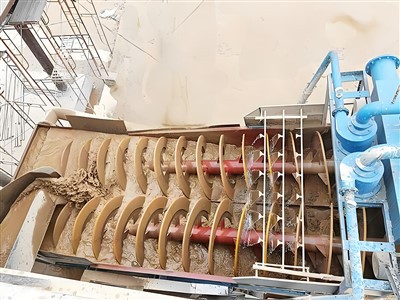
Product Introduction
A vibrating feeder is a material handling device that primarily uses vibration to create a flowing state of materials within a conveying pipeline, thereby achieving material transport.
Typically, a vibrating feeder consists of a vibrator, conveying pipeline, inlet, and outlet. During operation, it requires adjustment and maintenance based on material properties and conveying requirements to prevent material blockages or spillage.
Model Specifications
| Model number | Maximum feed particle size (mm) | Processing capacity (t/h) |
Motor power (kW) |
Double amplitude (mm) |
Vibration frequency (r/min) |
Dimensions (mm) |
Weight (kg) |
| GZG40-4 | 100 | 30-40 | 2×0.25 | 4 | 1450 | 1337×750×600 | 171 |
| GZG63-4 | 200 | 110-150 | 2×0.50 | 4 | 1450 | 1648×1000×767 | 379 |
| GZG80-4 | 250 | 160-230 | 2×0.75 | 4 | 1450 | 1910×1188×850 | 563 |
| GZG100-4 | 300 | 270-380 | 2×1.1 | 4 | 1450 | 2190×1362×900 | 762 |
| GZG150-4 | 500 | 720-1000 | 2×2.25 | 3.5 | 1450 | 2794×1776×1220 | 1477 |
| GZG150-6 | 500 | 780-1080 | 2×3 | 5 | 960 | 2500×1864×1412 | 1441 |
Advantages of Vibrating Feeders:
1. High conveying efficiency: Significantly boosts production output;
2. Uniform and stable feeding: Ensures consistent, continuous material supply with adjustable excitation force. Flow rate can be modified and controlled at any time for convenient operation without material surges;
3. Versatile Adaptability: Suitable for a wide range of materials including powders, granules, and lumps. Customizable with dust covers, wear liners, seals, water-cooled jackets, and other components to accommodate specific operating conditions.
4. Low Maintenance: Utilizing resonance principles minimizes power consumption, wear, and maintenance costs. Its simple structure, compact size, light weight, and few wear parts facilitate easy upkeep.
5. Eco-Friendly and Energy-Efficient: The enclosed body prevents dust pollution. Vibration motors as the excitation source ensure low noise and minimal power consumption.
Product Display


Working Principle of Vibrating Feeders:
The working principle of vibrating feeders is based on the effects of vibration dynamics and inertial forces. Its core mechanism involves the periodic vibratory force generated by a vibrating motor, causing the feed trough to vibrate and thereby propelling materials forward. The specific working principle is divided into the following steps:
1. Generation of Vibration Force: The vibrating force is typically produced by a vibrating motor. This motor contains a set of eccentric weights. As the motor rotates, these weights generate centrifugal force. Due to the asymmetrical design of the weights, the centrifugal force undergoes periodic changes in both horizontal and vertical directions, thereby creating the vibrating force.
2. Vibration Transmission: The vibrating force from the motor is transmitted to the feed trough via spring support assemblies. These springs not only support the trough but also amplify the vibrating force, enabling the trough to achieve greater amplitude.
3. Material Movement: When the feed trough vibrates, the material within experiences inertial forces. Since the vibration direction aligns with the trough's incline, the material moves forward along the trough under the force of vibration. The material's trajectory typically follows a parabolic path, featuring both horizontal movement and vertical bouncing.
4. Feed Rate Adjustment: By regulating the frequency and amplitude of the vibrating motor, the material feed rate can be controlled. Higher frequency increases material movement speed, while greater amplitude elevates material bounce height. Precise feed control is achieved through optimal adjustment of these parameters.
Structural Components
The structure of a vibrating feeder comprises the following core components, which work together to achieve uniform material conveyance
Vibration Source
Responsible for generating vibration. Common types include vibrating motors, electromagnetic vibrators, or eccentric vibrators.
Working Body
Primarily the material trough where materials directly move. Its shape and dimensions are designed based on material properties and throughput requirements.
Support and Isolation System
Composed of springs to support the entire vibrating body while isolating vibrations from the ground or frame, minimizing impact on surrounding equipment.
Frame and Base
Provides the mounting platform, integrating all components into a unified structure. Depending on installation methods, it can be base-mounted or suspended.
Transmission and Connection Components
Such as couplings and bearings, responsible for smoothly transferring power from the vibration source to the working body.
Auxiliary Components
Configured as needed, such as dust covers, wear-resistant liners, and hoppers, to adapt to different working environments.

Performance parameters
|
Model |
Tank size (mm) |
Feed size (mm) |
Motor power (kw) |
Throughput (t/h) |
|
ZGC0983 |
900*3800 |
≤500 |
3.7*2 |
150-200 |
|
ZGC1238 |
1200*3800 |
≤750 |
4.2*2 |
250-400 |
|
ZGC1250 |
1200*5000 |
≤750 |
7.5*2 |
250-450 |
|
ZGC1538 |
1500*3800 |
≤1000 |
6.3*2 |
400*700 |
|
ZGC1550 |
1500*5000 |
≤1000 |
10*2 |
400-900 |
|
ZGC2050 |
2000*5000 |
≤1200 |
22*2 |
800-1500 |
|
ZGC2560 |
2500*6000 |
≤1600 |
45*2 |
2000*3000 |
Application scenarios
Mine Mining
Uniform feeding before the coarse crushing of iron ore and copper ore.
Aggregate Production
Pretreatment in the crushing lines of basalt and river pebbles.
Solid Waste Treatment
Screening and feeding of construction waste and steel slag.
Industrial Raw Materials
Graded conveying of cement clinker and quartz sand.
Hot Tags: vibrating feeder, China vibrating feeder manufacturers, suppliers, factory, vibramech screens, vibrating screen double deck, industrial vibrating sieve, vibrating screen company, vibratory screeners for sale, single deck vibrating screen